A historical feature screenplay
From All Sides
A story of hidden children, stolen art, and the choices made under occupation.
What is worth preserving in times of war?
Set in German-occupied BelgiumInspired by documented family history
The cost of silence
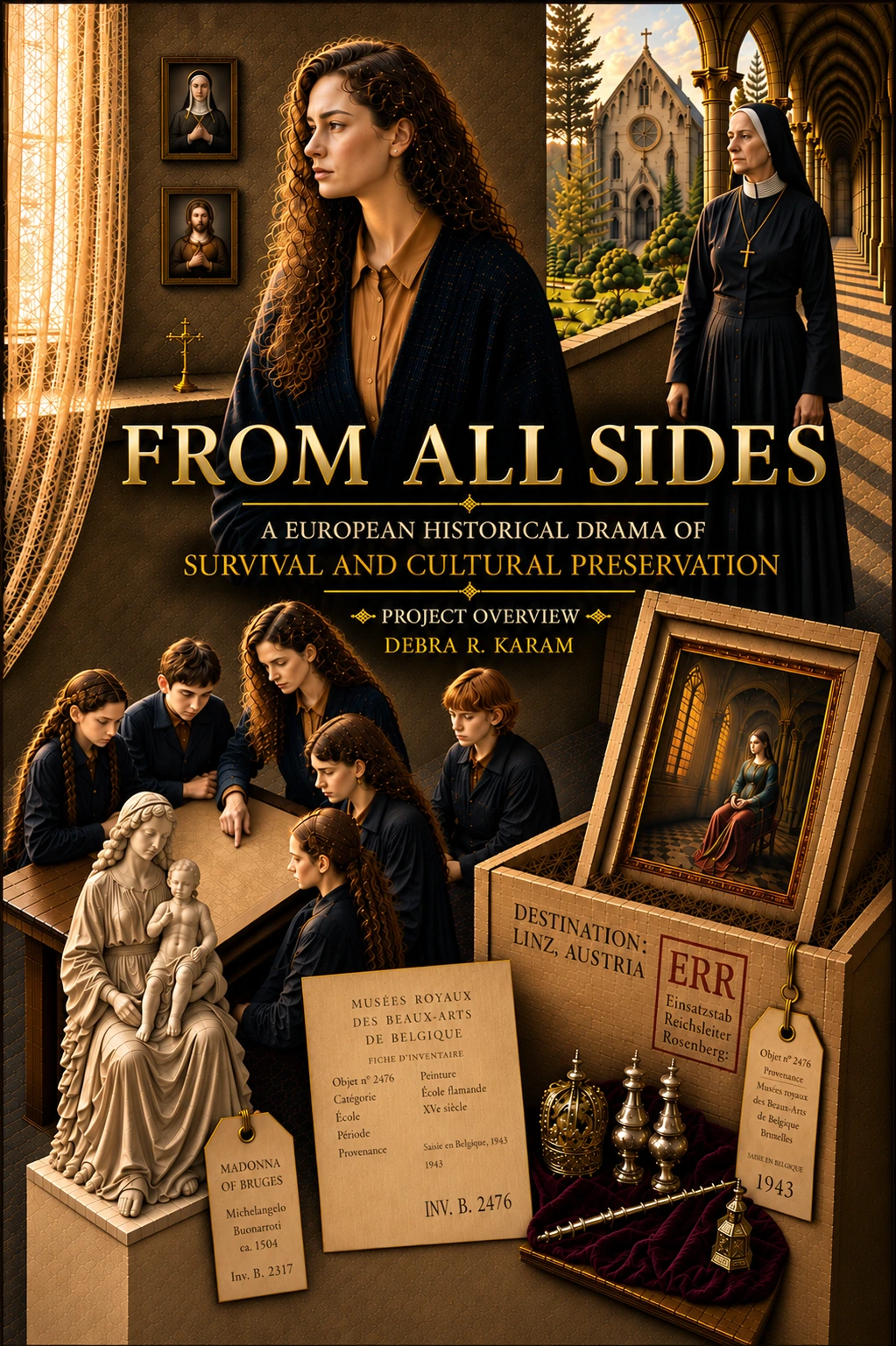
In German-occupied Belgium, a Jewish teenager hides under a Catholic identity in a convent. She learns its rituals and teaches younger children where to hide if soldiers arrive. Silence and obedience protect them—until Anna must decide when to speak and whom to defy.
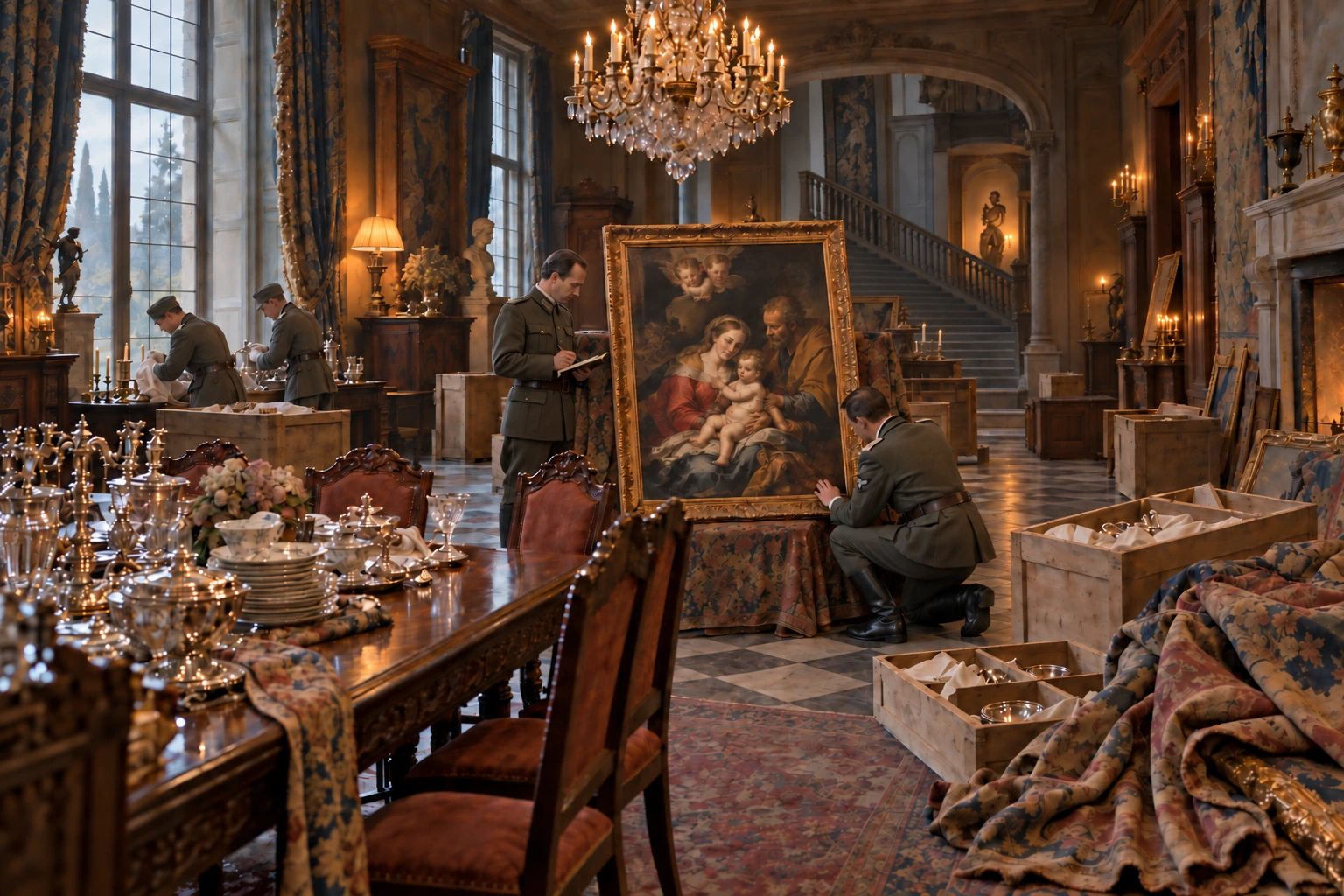
Across occupied Belgium, a Nazi art-looting operation targets private collections, museum holdings, and church treasures, including Michelangelo’s Madonna of Bruges. The team includes Otto Dirks, a fictional German painter whose own work the regime branded “degenerate” and seized.
On the convent grounds, paintings and religious objects are hidden in an old chapel. When the looters reach the convent, Anna must decide whether to keep the cache secret or reveal its location in an attempt to save the children and the sisters.
The film opens and closes at a Brussels museum in 1964. Anna, now a curator, faces protests over an exhibition that includes Dirks’s recovered art. Two decades after the war, she faces a question restitution cannot settle: how can she exhibit the work of a Nazi artist while still reckoning with the regime he served and the lives it destroyed?
A story rooted in testimony
The screenplay grew from my mother Anna Goldsmith’s experience as a Jewish child hidden in Belgium during the Second World War.
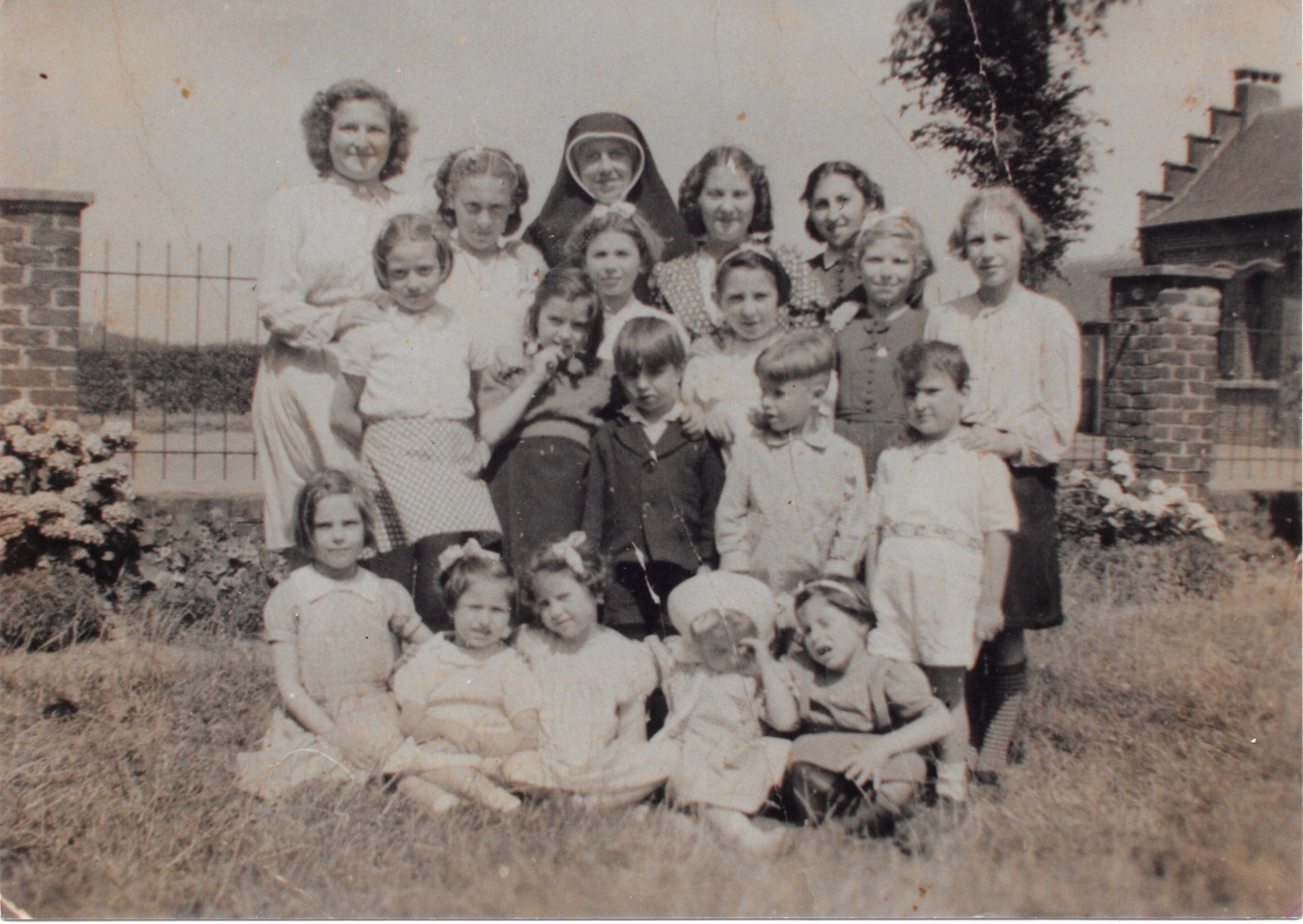
Anna and her siblings were sheltered by the Sœurs de Marie at L’Ermite in Braine-l’Alleud. Family testimony, photographs, and Belgian archival records help reconstruct their wartime experience.
Belgian Foreigner Police files and compulsory Jewish registration cards preserve traces of the family’s life in Brussels. Coded cards kept by the clandestine Comité de Défense des Juifs (CDJ) document the siblings’ wartime placements.
The screenplay sets a fictional convent in Bruges. Its art-looting plot and Anna’s later museum role were created for the film. Their shelter at L’Ermite and the people in the photograph below belong to the historical record.
The Goldsmith family
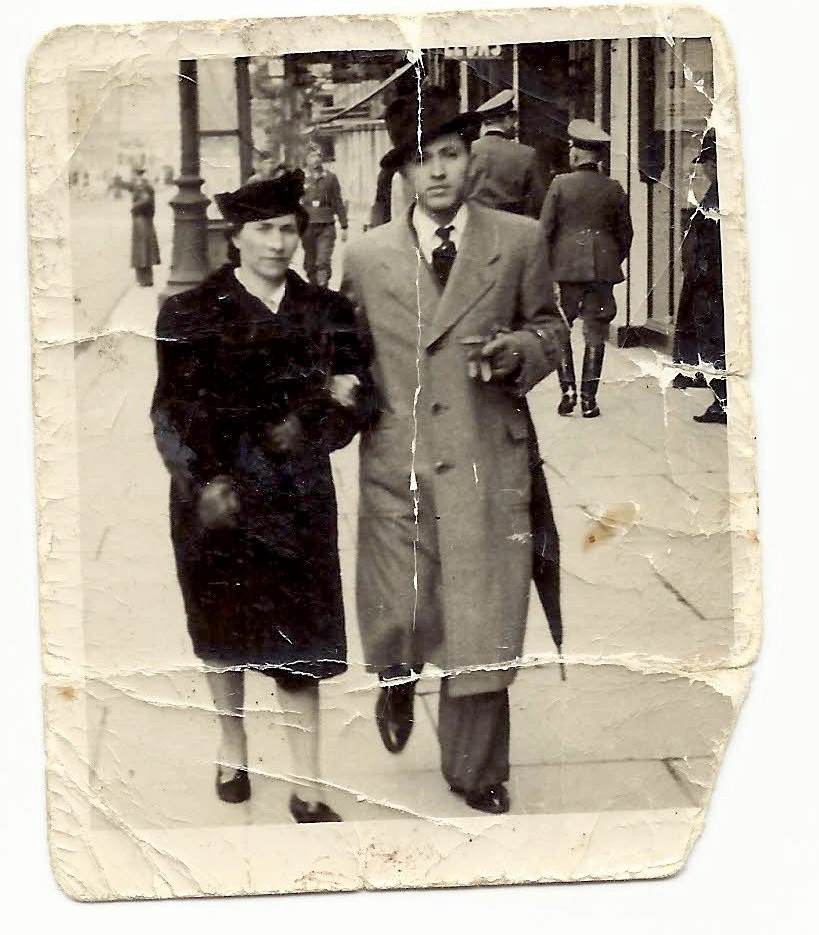
Anna’s parents emigrated from Poland to Belgium in the 1920s and settled in Brussels, where they raised their family. During the occupation, they were separated from their children, who survived in hiding.
As firsthand witnesses disappear, the responsibility to listen, document, and remember becomes more urgent.
Debra R. Karam
Debra is a screenwriter and historical researcher. Her work on From All Sides draws on family testimony, Belgian archives, and questions of memory, identity, and moral responsibility.
She is a dual U.S.–Polish citizen, a registered nurse, and a legal nurse consultant.
Start a conversation
For producing, documentary, educational, or archival inquiries, please write to me. Project materials are available upon request.
debrakaram@gmail.com